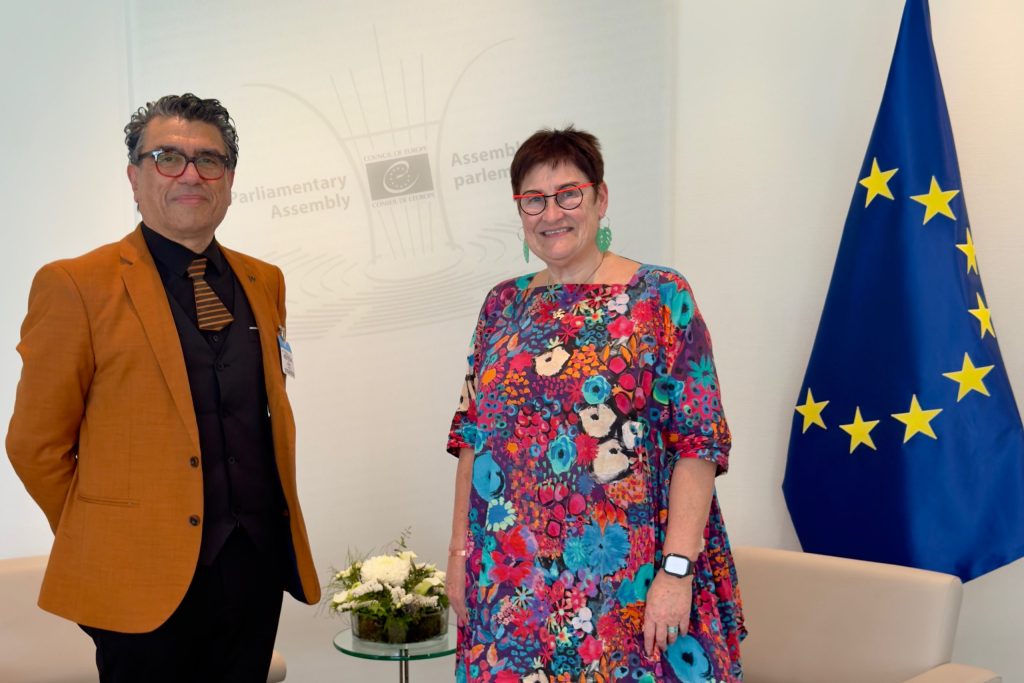
The Photo; President of the Parliamentary Assembly of the Council of Europe, Petra Bayr with Founder of BPUR, Salam Sarhan
London / Strasbourg — A significant new resolution adopted by the Council of Europe is set to accelerate international efforts to confront the political abuse of religion, a practice increasingly recognised as a driver of discrimination, instability, and conflict.
Titled “Countering discrimination based on religion and protecting freedom of religion or belief in Europe,” the Resolution 2647 elevates the issue of the political instrumentalisation of religion at the European level and calls for more effective responses within the existing international framework.
Importantly, the official report underpinning the adopted resolution (Report | Doc. 16373) refers to BPUR International and its global campaign to enact an International Treaty to Ban the Political Abuse of Religion as a “timely and interesting proposal” currently under consideration by experts and political bodies. The report is based on extensive consultations, including direct engagement with representatives of the initiative.
The resolution follows a motion launched in 2022 by 41 lawmakers from 19 countries, including lawmakers from Germany, Spain, the United Kingdom, Sweden, Belgium, Norway, Austria, Portugal, Greece, Denmark, Turkey and Switzerland. It is underpinned by consultations across Europe involving government officials, parliamentarians, religious leaders, and civil society representatives.
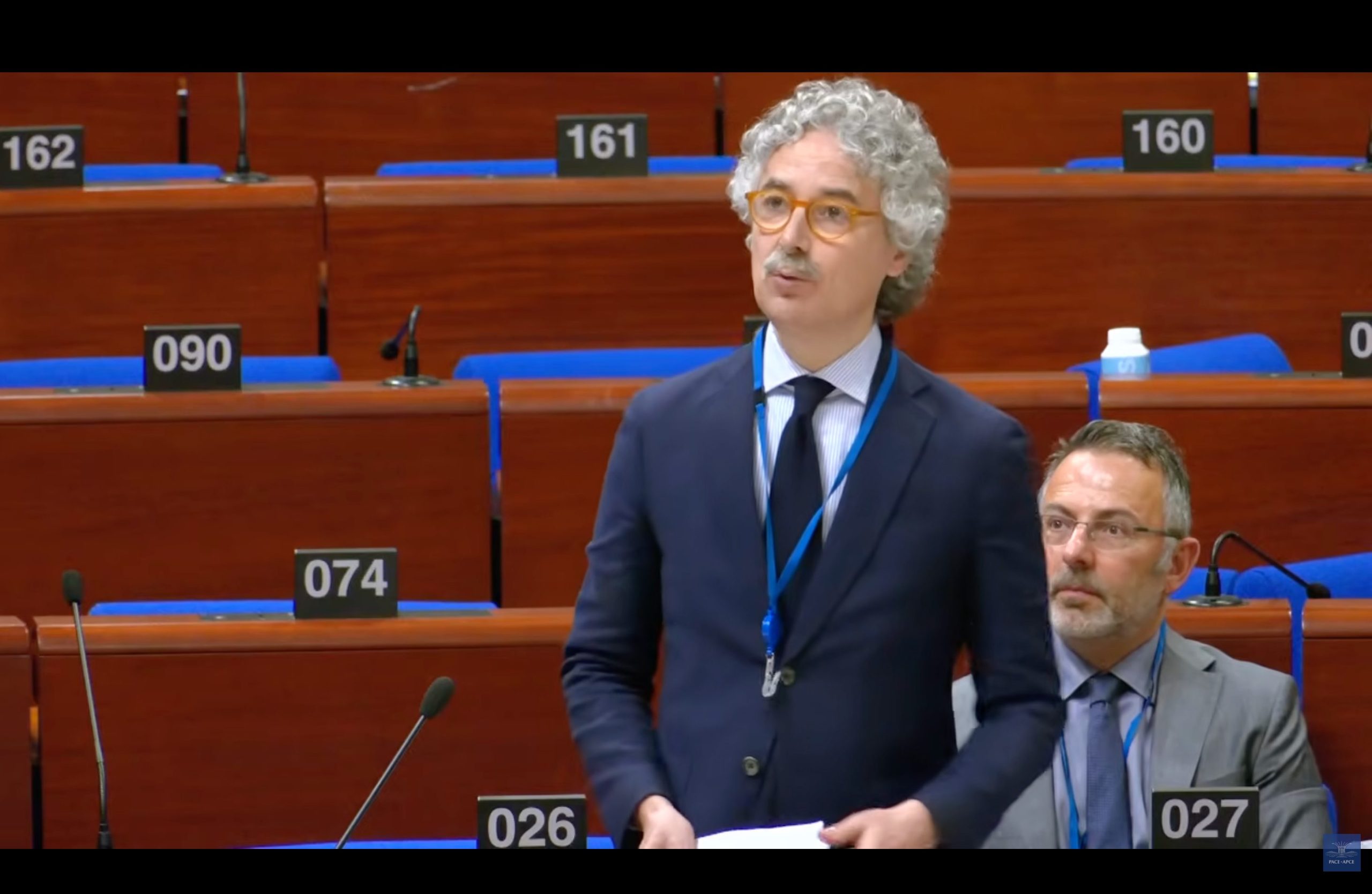
Rapporteur Senator Francesco Verducci presenting his report at the Council of Europe
A Turning Point in International Engagement
The adoption of the resolution across the Council of Europe’s 46 member states establishes a shared institutional recognition that the political abuse of religion is a serious and under-addressed challenge.
The report’s reference to the BPUR initiative, alongside its broader findings, reflects a growing recognition of the need for clearer and more practical approaches to address this issue.
The report further notes that the initiative has gained the support of prominent figures and highlights engagement with its representatives in London, including discussions with senior religious and public leaders.
From Recognition to State Action
The Council of Europe process is expected to catalyse national and international steps, including:
Parliamentary engagement to raise the issue at government level.
Policy discussions within foreign ministries and legal departments.
Formation of cross-party parliamentary groups.
Increased alignment among governments interested in cooperative solutions.
This process aims to formally engage a group of responsible governments prepared to take the proposed treaty forward for further international consideration, including potential engagement at the United Nations General Assembly.
Observers note that such developments could contribute to broader international alignment in support of clearer and more effective standards.
Accelerating Momentum with Westminster Declaration
This development builds on growing international traction, including a high-level conference held at the House of Commons in London on 26 March 2026, supported by the UK All-Party Parliamentary Group for Freedom of Religion or Belief.
The conference brought together senior officials and international representatives from multiple regions and resulted in the adoption of the Westminster Declaration, which calls for clearer and more effective standards to prevent the political abuse of religion while protecting the integrity of faith and principles of equality.
Further reinforcing this momentum, BPUR International has introduced the International Award for Confronting the Political Abuse of Religion, recognising global leadership in advancing these principles.
Addressing a Critical Gap
While freedom of religion or belief is firmly established in international law, existing frameworks remain broad and aspirational. The political abuse of religion continues to result in discrimination, exclusion, and instability in many contexts.
The proposed treaty aims to address this gap by introducing clear, focused, and universally applicable standards to prevent the misuse of religion in ways that undermine equality and social cohesion.
According to Dr Stephen Schneck, the US Commissioner on International Religious Freedom, “the treaty proposed by BPUR International would create binding international standards—not aspirational declarations, but enforceable norms—with a global monitoring mechanism to document violations and coordinate international responses. And it would do so without singling out any particular religion or country, recognizing that the political abuse of religion is a universal problem that demands universal rules”
A Path Toward Global Impact
With the issue now firmly elevated within the Council of Europe and the initiative referenced within its official report, the campaign is entering a new phase of international engagement.
Governments are increasingly presented with an opportunity to engage in shaping a practical and balanced international framework addressing major drivers of instability.
BPUR International’s roadmap focuses on structured state-level engagement and the development of a pathway toward formal international consideration and state adoption. BPUR International, a UK-registered organisation, is leading this initiative.
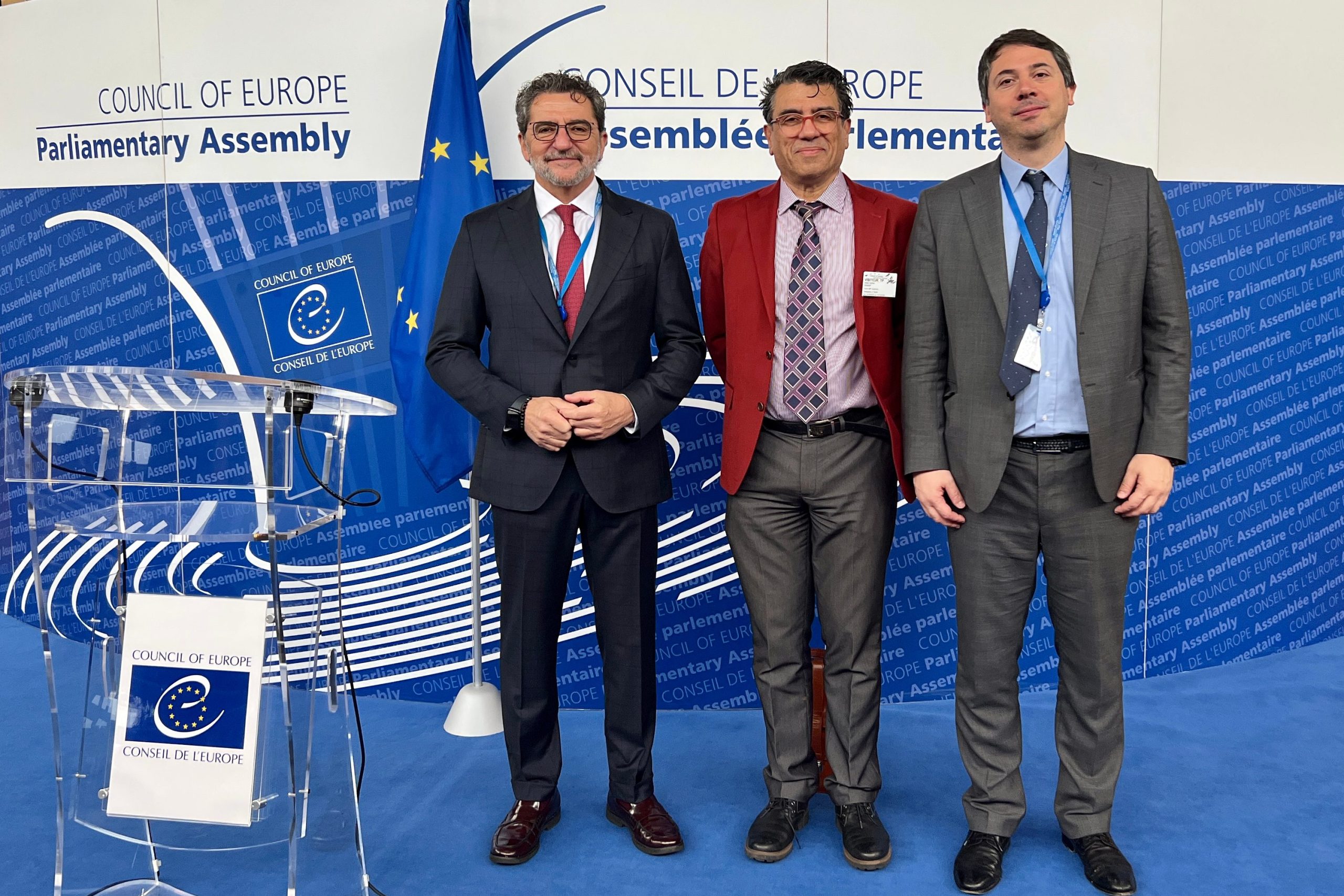
Founder of BPUR, Salam Sarhan between leading supporters at the Council of Europe, Gerardo Giovagnoli (right) and Antonio Gutierrez Limones (left)