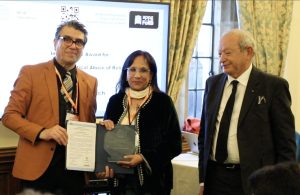
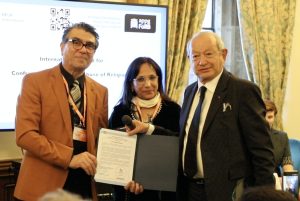
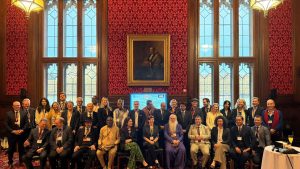
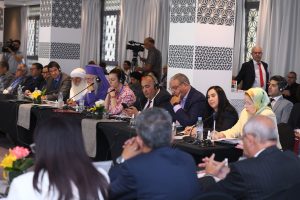
BPUR International convened a high-level international conference at the House of Commons in London on 26 March 2026, bringing together senior officials, parliamentarians, religious leaders and international stakeholders to address the political abuse of religion as a root cause of conflict and instability.
A central outcome of the conference was the adoption of the Westminster Declaration on Preventing the Political Abuse of Religion, a significant international statement calling for the strengthening of existing human rights frameworks and the development of clearer, practical and universally acceptable standards. The declaration urges governments to engage constructively toward an International Treaty to Ban the Political Abuse of Religion, aimed at moving from principle to practical protection on a global scale.
The full text of the declaration is set out below:
Westminster Declaration on Preventing the Political Abuse of Religion
House of Commons, London – 26 March 2026
We, the officials, parliamentarians and representatives of governments, civil society, religious institutions and international organisations gathered at the House of Commons,
Reaffirm that freedom of religion or belief is firmly recognised in international law, notably under Article 18 of the Universal Declaration of Human Rights, and remains an essential pillar of human dignity, equality and peaceful coexistence.
Recognise that religion and belief are deeply rooted in the identity and moral fabric of societies, and that their protection and integrity are a shared responsibility of governments and communities alike.
Acknowledge that, in certain contexts, the political exploitation of religion has contributed to discrimination, exclusion, instability and conflict, undermining equal human rights and weakening social cohesion.
Observe that while existing international norms establish important principles, they often remain broad and aspirational, lacking clearly defined preventive standards, safeguards and effective remedies. As a result, victims face limited avenues for redress, and governments may lack clear guidance. These gaps contribute to persistent inequality and many contemporary conflicts.
Affirm that preventing the political abuse of religion does not diminish religion or restrict legitimate expression of faith. Rather, it protects the sanctity of religion, strengthens trust in public institutions, and reinforces stability within diverse societies.
Declare that:
- Freedom of religion or belief must be guaranteed for all individuals without discrimination.
- Equality before the law and equal protection of rights is essential for stable societies.
- Public authority should not use religion to restrict rights or create inequality.
Clear international standards are therefore needed to prohibit:
- Political abuses of religion that undermine human equality;
- Religious discrimination in rights and duties;
- Religious exclusion in public law and governance;
- Restrictions on freedom of religion or belief arising from political manipulation of faith.
The international community would benefit from affirming, complementing and upgrading its legal toolkit through clearer, precise and universally respectful standards, moving from principle to practical protection on a global scale.
We therefore call upon governments, parliaments and international partners to engage constructively in advancing this initiative, including through consideration of an International Treaty to Ban the Political Abuse of Religion, designed to strengthen legal clarity, support domestic frameworks, and promote social cohesion and stability.
This initiative is non-confrontational and inclusive. It does not seek to impose models or target any faith or nation, but to establish fair and balanced standards that protect freedom and equality.
Recognising that progress in international law requires state leadership, we encourage governments to consider supporting, adopting, and taking forward this initiative through structured international engagement, including at the United Nations General Assembly.
In this spirit, participants commit to continued cooperation to encourage responsible state engagement in advancing this global effort to make the world more fair and more peaceful.
Signatories to the Westminster Declaration:
- Amina Bouayach: President of the National Human Rights Council, Morocco
- Dr Stephen Schneck, US Commissioner on International Religious Freedom, USA
- Canon Dr Sarah Snyder, Founder of Rose Castle Foundation, UK
- Naguib Sawiris, Philanthropist, Global Investor, Patron of BPUR, Egypt
- Jim Shannon MP, Chair of the UK All-Party Parliamentary Group for FoRB, UK
- Sir Liam Fox, Chair, Abraham Accords Prosperity Group, Former Defence Minister, UK
- Salam Sarhan, Founder & Secretary General of BPUR International, Iraq
- Archbishop Angaelos, Papal Legate to UK & Founder/Director of Refcemi, UK-Egypt
- Archbishop Malkhaz Songulashvili, Metropolitan Bishop of Tbilisi, Georgia
- Lord Krish Raval OBE, Founder and Director of Faith in Leadership, UK
- Rabbi Alexander Goldberg of Guildford & Surrey, Faith Coordinator, City of London
- Rabbi Jonathan Romain MBE, Chair, Rabbinical Court, Movement for Reform Judaism, UK
- Dr Brian J Grim, Founding President of Religious Freedom & Business Foundation, USA
- John Snyder, Entrepreneur & Founding Director of Rose Castle, UK
- Eduard Shalsi, Chair of the Committee on Economy and FinanceParliament of Albania
- Edwin Shuker, International Businessman. Philanthropist and Peace Activist, UK
- Struan Stevenson, Prominent Politician, Board Member of BPUR International, UK
- Professor Jolyon Mitchell, Principal of St John’s College, UK
- Dr Shereen Fuad Masum, Diplomat and Political advisor, Kurdistan Iraq, UK
- Johnny Heald, CEO (UK) of ORB international
- Melissa Dewar, Philanthropist, Entrepreneur, Investor, TEDx Speaker, UK
- Revd Dr Nadim Nassar, Founder and Executive Director of Awareness Foundation, Syria
- Martha Bissmann, Former Lawmaker & Ambassador of BPUR, Austria
- Fath El Habti, Head of International NGO, National Human Rights Council, Morocco
- Abdelghani Berdi, Director of Communication, National Human Rights Council, Morocco
- Laura Roberts, Board Member of the UK Abraham Accords Group, UK
- Edmund Otudeko MNI, Policymaker and Executive Director of the NILDS, Nigeria
- Dr Taras Dzyubanskyy, Acton Institute/Collins Center for Abrahamic Heritage, Vatican
- Dr Munqith Dagher, Political advisor & MENA Director of Gallup International, USA
- Mathilda Milik, Entrepreneur, Co-founder & CEO at OCTARR, UK
- Alisa Lockwood, Chair of the Global Diplomatic Forum, UK
- Freddie Russell, Executive Director at UK Abraham Accords Group, UK
- Dr Arben Ramkaj, Chairman at Interreligious Collaboration Center, Albania
- Paul Salahuddin Armstrong, Managing Director, Association of British Muslims, UK
- Mirza Dinnayi, Aurora Prize Laureate, Yazidi Genocide Expert, Germany
- Dr Hamid Alkifaey, Writer, Journalist activist and commentator, Iraq-UK
- Dr. Raphael Ogar Oko, Former Secretary General, Universal Peace Federation, Nigeria
- Ali Jabbar, Globally renowned artist, senior advisor to BPUR , Denmark
- Ghaleb Darabya, Prominent scholar on Leadership and Public Policy, Palestine – UK
- Jeroen van der Horst, Philanthropist and technology entrepreneur, The Netherlands
- Filip Perkon, Angel Investor, Philanthropist, Founder at Bamboo Venture Partners
- Rick Sopher, Philanthropist, CEO of Edmond de Rothschild Capital Holdings, UK
- Imtiaz Hussain, Investor, CEO at UK-GCC Private Capital Alliance, UAE
- Diar Umary, Journalist, Senior Reporter, Dubai TV, UK
- Denis Keefe CMG, Former British Ambassador, UK
- Sonal Kadchha, Philanthropist, Charity Founder, Prominent Therapist and Banker, UK
- Lara Buchanan, Director of Pedagogy, Rose Castle Foundation, UK
- Ciarán Wadd, head of campaigns, Rose Castle Foundation, UK
- Wael Aleji, UK Director of Syrian Christians for Peace, Syria – UK
- Muhammad Antabli, Founder and director of Palmyra Relief, Syria
- Dr Sunday Adesanmi, Entrepreneur and Philanthropist, UK
- Sir Graham Watson, Former leader of Liberal Group, European Parliament, UK
- Naseer Shamma, Ambassador of the UNESCO, Board Member of BPUR, Iraq.
- Lincoln Bloomfield Jr, Former Assistant Secretary of State, USA
- Dr Joel Hunter, prominent pastor, community leader, and bridge-builder, USA.
- Elisabetta Zamparutti, Prominent Politician, Board Member of BPUR, UK.
- Ondrej Prostrednik, Member of Parliament, Slovakia.
- Gerardo Giovagnoli, Prominent Member of the Council of Europe, San Marino
- Paulo Casaca, former European & Portuguese lawmaker, director of ARCHumankind
- Dastan Ali, Head of Gender Unit, Ministry of Endowments and Religious Affairs, Iraq
- Fadi Abi Allam, President of the Green Party of Lebanon
- Toni Nissi, UN official and Ambassador & Representative of BPUR, Lebanon
- Paul Moñozca, Chair of Mon̈ozca Family Office & Bank of Humanity, Philippines
- Baria Ahmar Conti, Ambassador & Representative of BPUR, France-Lebanon
- Nikita Artamonov, Political and Legal Affairs, Embassy of Switzerland
- Padideh Sabeti – National Spiritual Assembly of the Bahá’ís of the UK
- Daniel Wheatley – National Spiritual Assembly of the Bahá’ís of the UK
- Jared Kerr – Church of Latter-Day Saints, UK
- Marwan Francis, Deputy Head of Mission of Lebanon Embassy to the UK
- Ala Al Louzi, Deputy Head of Mission Embassy of Jordan in London, Jordan
- Talal Alabsi, Counsellor at the Embassy of Bahrain to the UK, Bahrain
- Gabriella Maxwell, Operations Manager, BPUR International, UK
- Sci Sarhan, Artist and IT manager at BPUR International UK
- Shahad Suwaed, Assistant Manager BPUR International, UK
- Christian Jimenez, Assistant Manager BPUR International, UK