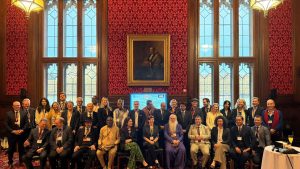
BPUR International convened a high-level international conference at the House of Commons in London on 26 March 2026, addressing one of the most persistent and destabilising drivers of global conflict under the title “Global Rules to Ban the Political Abuse of Religion – International Partnership to Address the Root Causes of Religious Conflicts.”
Sponsored by BPUR International’s stakeholder, the UK All-Party Parliamentary Group for International Freedom of Religion or Belief (APPG FoRB), the conference brought together senior officials, parliamentarians, religious leaders philanthropists and distinguished dignitaries frpm around the world in the historic Churchill Room at the Palace of Westminster.
The conference opened with keynote addresses from Jim Shannon MP, Chair of APPG FoRB; Amina Bouayach, President of the National Human Rights Council of Morocco; global investor and philanthropist Naguib Sawiris; Dr Stephen Schneck, Commissioner at the US Commission on International Religious Freedom; and Sir Dr Liam Fox, Chair of the Abraham Accords Prosperity Group and former UK Defence Secretary.
Canon Dr Sarah Snyder opened the conference as moderator, highlighting the importance of the initiative and the dedication of participants to advancing it on the international agenda.

Jim Shannon MP stressed the importance of the initiative to protect freedom of religion or belief and expressed his hope that “by uniting the international community, this conference will contribute to lasting and tangible progress.”
Amina Bouayach emphasised Morocco’s strong commitment to addressing all forms of the political abuse of religion that violate human rights.
Naguib Sawiris underlined the urgency of the initiative and called for focus on securing the first state adoption, while Sir Dr Liam Fox highlighted the importance of ensuring that public authority does not use religion to restrict rights or create inequality, warning against the dangers of theocratic power.
Dr Stephen Schneck noted that the proposed treaty complements and extends the vision of the Universal Declaration of Human Rights, addressing the political instrumentalisation of religion in ways that undermine equality, impose discrimination, and restrict freedom of belief.

Discussions throughout the conference focused on a recognised gap in the international framework on freedom of religion or belief: while firmly established in international law, existing norms are often aspirational, lacking clear preventive standards, consistent safeguards, and effective remedies. Participants examined how this gap contributes to religious inequality, weakens social cohesion, and fuels instability and conflict.
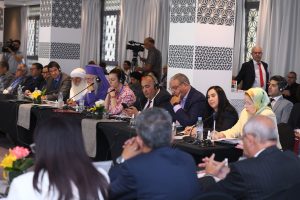
Panel One examined the case for an international treaty, emphasising the need to move from political commitments to clear and actionable legal standards. Panel Two focused on translating freedom of religion or belief from principle into practical protection through preventive and non-confrontational approaches.
A central outcome of the conference was the issuance of a significant international declaration. It reaffirms existing human rights norms while recognising the need to strengthen the international legal framework through clearer, more precise, and universally respectful standards. The declaration calls for constructive international engagement toward the development of an International Treaty to Ban the Political Abuse of Religion, aimed at moving from principle to practical protection on a global scale.

The declaration further emphasises that the initiative is non-confrontational, does not target any religion or country, and does not regulate belief. Instead, it focuses on preventing the political exploitation of religion where it leads to discrimination, exclusion, or restriction of rights, reinforcing that protecting equality and safeguarding the integrity of faith are mutually reinforcing goals.
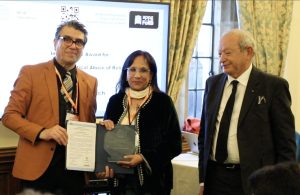
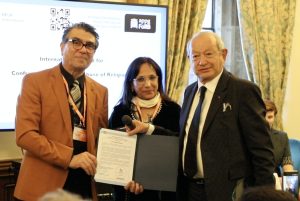
During the conference, BPUR International unveiled the International Award for Confronting the Political Abuse of Religion, established by its Board of Trustees. The inaugural awards were presented to Amina Bouayach and Naguib Sawiris in recognition of their lifelong and outstanding contributions to advancing equality, responsible governance, and international dialogue aligned with the objectives of this global initiative.
The conference also highlighted growing international momentum, including engagement with governments and ongoing parliamentary efforts, notably within the Council of Europe. Participants emphasised that meaningful progress will depend on state leadership and ownership, with a view to advancing structured discussions at the United Nations General Assembly.
Bringing together over 60 senior officials, lawmakers, and international stakeholders, the conference marked a significant step toward building a global consensus around a practical, fair, and universally acceptable framework to address the root causes of religious conflict and discrimination.
Participants concluded by reaffirming their commitment to continued dialogue and cooperation, encouraging governments worldwide to support and take forward this initiative to make the world more fair and more peaceful.
Westminster Conference Program